A Rare Finely Carved Anglo-Indian Drop-Front Bureau,
Late 19th Century.
MYR 23,000
Description
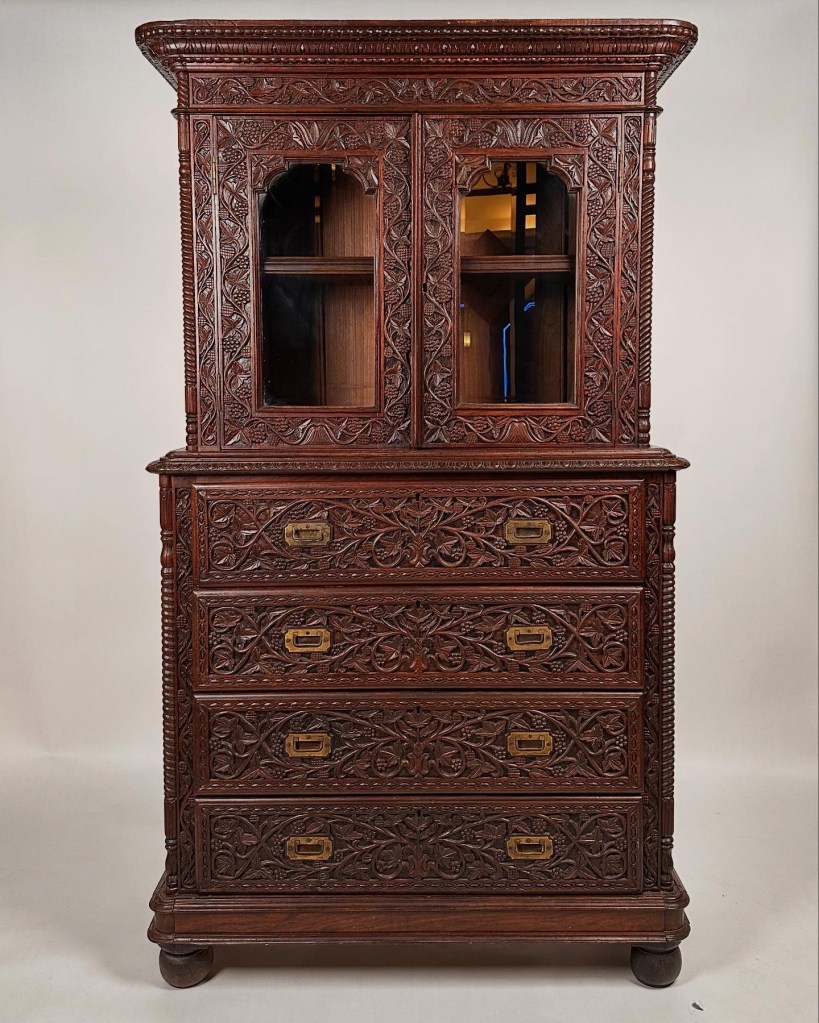
A piece that effortlessly balances ornamentation with function, this Anglo-Indian drop-front bureau, crafted in Calcutta between the 1880s and 1890s, is a masterful display of fine woodworking. Carved from deeply patinated rosewood, its surface is adorned with cascading ivy and grapevine motifs, rendered in high relief with exceptional precision. The overall form carries a Portuguese colonial influence, its gentle poised stance rests atop elegantly turned ball feet.
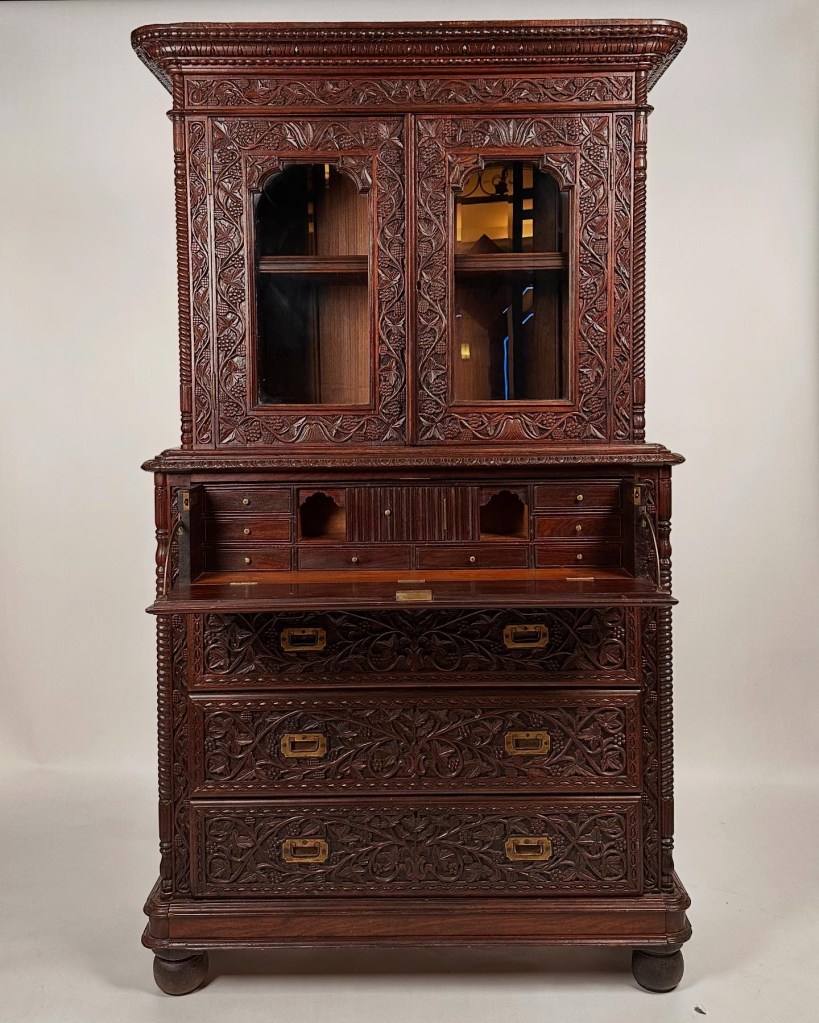
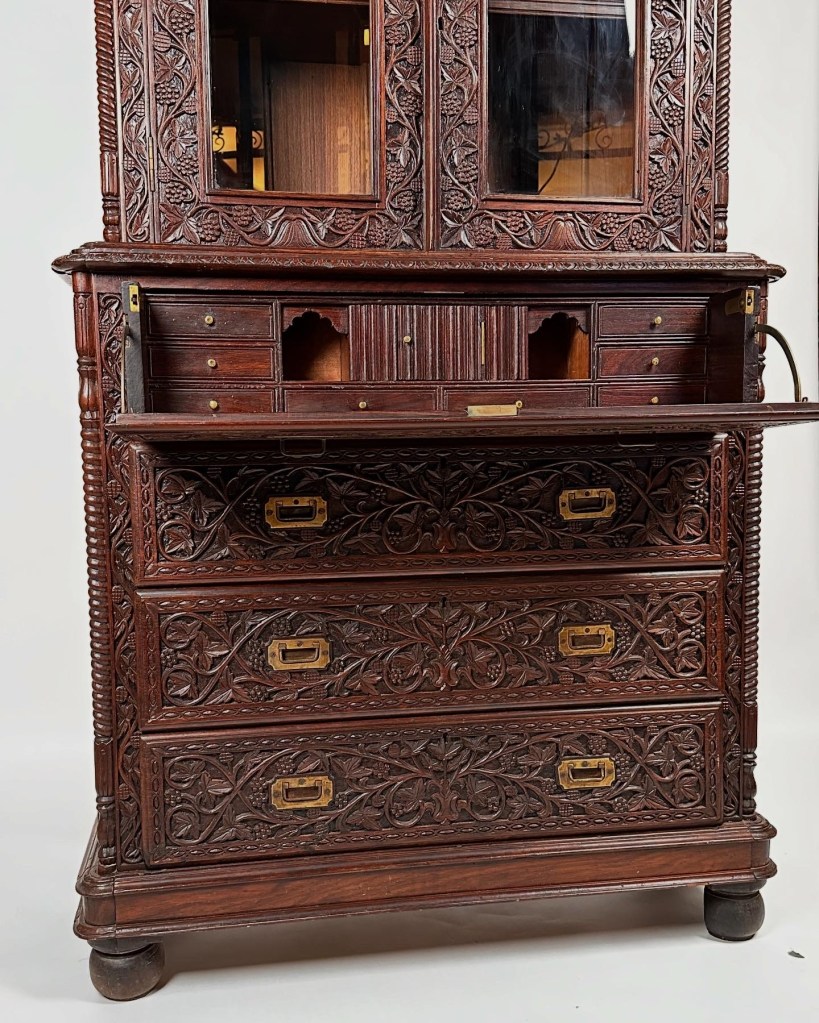
Once opened, the piece takes on an entirely new dimension. The drop-front drawer reveals a strikingly veined rosewood writing surface, its polished grain catching the light in a way that feels almost fluid. As the drawer lowers, it casts a shadow over the lower half of the bureau, allowing the carvings to stand out in dramatic contrast—every vine, leaf, and flourish suddenly appearing sharper, more pronounced.
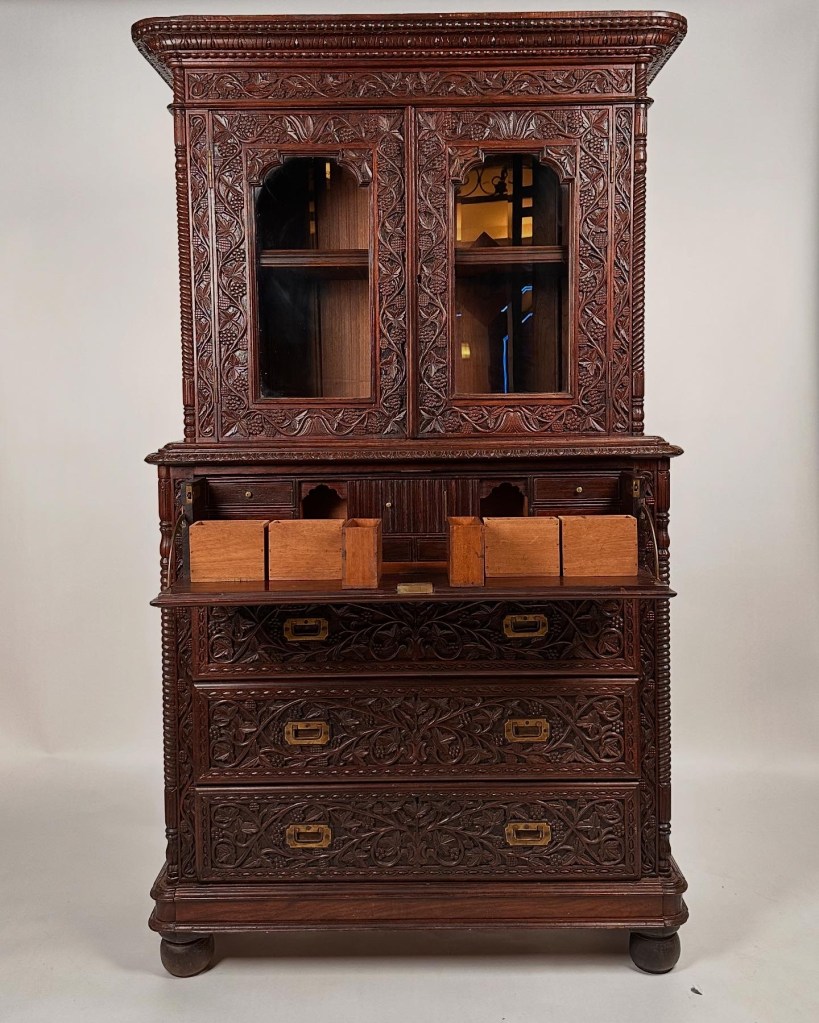
Inside, a beautifully arranged interior awaits. A series of drawers and pigeonholes provide structured organization, but the true marvel lies in six hidden compartments, discreetly integrated into the design. Crafted with remarkable precision, these compartments were undoubtedly intended for securing important documents, valuables, or perhaps more personal correspondences.
Chinese Suan Zhi Quadruple Back Settee: An Intersection of Suzhou Simplicity and Early 20th Century Shanghai Influence in the Straits Settlements
Introduction
This settee is a prime example of how furniture of the Straits Settlements embodies the convergence of cultural and aesthetic influences to reflect the stylistic preferences and cultural identity of the Peranakans.
Suzhou Style and Ming Dynasty Aesthetic Principles
Originating from Jiangsu Province, Suzhou-style furniture reflects Ming Dynasty values of simplicity, functionality, and harmonious proportions. This design ethos emphasises clean lines and balance, celebrating the wood’s natural qualities through minimal ornamentation. Furniture in this style often features curved backrests, smooth finishes, and balanced symmetry, exemplifying the Ming ideal of refined austerity.
In this context, the settee’s construction is emblematic of Ming simplicity, as it emphasizes proportion and material quality over elaborate design. The deep, dark grain of Suan Zhi / Rosewood lends the piece a dignified character, consistent with Ming values that placed quality of material as a central aesthetic component.
Qing-Shanghai Style and East-West Fusion
The Qing-Shanghai style, or 清式海派 (Qing Shi Hai Pai), developed in the early 2oth Century as Shanghai became a center of international trade and cultural exchange. The style is characterised by a fusion of Chinese traditional forms with Western elements, reflecting the cosmopolitan nature of Shanghai’s social landscape.
The oval back panels on the settee are an example of this integration, incorporating European influences into an otherwise traditional Chinese structure. A classic rectangular frame is juxtaposed with these curved panels, creating a hybrid design that would have been especially appealing to the Straits Chinese of the time, who valued both heritage and modern sophistication in their furniture.
Peranakan Cultural Preferences in the Straits Settlements
The Peranakan, or Straits Chinese, community emerged as a distinct socio-cultural group within Southeast Asia, blending Chinese, Malay, and Western influences in their lifestyle and material culture. As affluent members of colonial society, the Peranakans were drawn to furniture that reflected both their Chinese heritage and their exposure to European influences.
This piece, with its refined integration of Suzhou early 20th Century Shanghai elements, represents the Peranakan inclination toward eclecticism. The inclusion of European-style oval back panels within a traditional Chinese form would have appealed to Peranakan aesthetics, which favored the blending of cross-cultural motifs as a reflection of social status and cosmopolitan outlook.
Material Considerations: Suan Zhi vs. Local Timbers
Material choice is a key aspect of this settee’s construction, reinforcing its status as a premium piece. Suan Zhi, or Burmese Rosewood, is a dense, richly grained hardwood valued for its durability and dark coloration. Its use underscores the piece’s luxury, aligning with Peranakan preferences for darker hardwoods as symbols of wealth and longevity.
Conclusion: What makes this Suan Zhi Quadruple Back Settee special?
This settee is far more than a functional object; it is a manifestation of stylistic influences within the Straits Settlements.
The integration of Suzhou-style simplicity, and Qing-Shanghai eclecticism, with Peranakan adaptability exemplifies the Straits Chinese community’s complex identity, blending Chinese tradition with Western influences.
References
- Craig Clunas, Chinese Furniture: A Guide to Collecting Antiques (New York: HarperCollins, 2002).
- Sarah Handler, Austere Luminosity of Chinese Classical Furniture (University of California Press, 2001).
- Kee Beng Ooi, The Peranakan Chinese Home: Art and Culture in the Straits Settlements (Singapore: Tuttle Publishing, 2012)
More to read:
Artisanship and Migration in the Straits Settlements
The piece might also reflect the migration of skilled artisans to the Straits Settlements, where they catered to the demand for high-quality furniture among the affluent. Chinese craftsmen from Suzhou or Shanghai, known for their expertise in traditional woodworking, were likely commissioned to produce furniture that combined established Chinese methods with modern influences. This skilled craftsmanship is evident in the settee’s precise joinery, polished surfaces, and carved details. The artisans’ flexibility to adapt traditional techniques to contemporary tastes reflects the Straits Chinese community’s preference for pieces that were both distinctive and respectful of cultural heritage. The inclusion of Western-inspired elements, such as the oval back panels, demonstrates the artisans’ responsiveness to Peranakan clients’ preferences for hybrid designs.
Republican Period Aesthetic Influences
The 1920s-1930s Republican period introduced a shift in furniture design, emphasizing a return to classical forms while embracing new influences and materials. This period aligned with the Straits Chinese desire to balance tradition with modernity. In this settee, the Republican aesthetic is manifest in its restrained form, which combines classical Chinese elements with the open-mindedness of the period. While the piece adheres to traditional values, it incorporates cosmopolitan elements that reflect the modern tastes of the Peranakan, who saw furniture as a means of expressing cultural adaptability within an evolving social landscape.
 The Gallerist Company